Guide 03 · Weekly progress
Turn Weekly Progress Into a Study Plan
Use the report to find what worked, what stayed weak, and the one topic that deserves your next session.
A progress report is useful when it changes what you study next. The goal is not to collect the largest activity total. It is to notice where effort produced secure learning and where it did not.
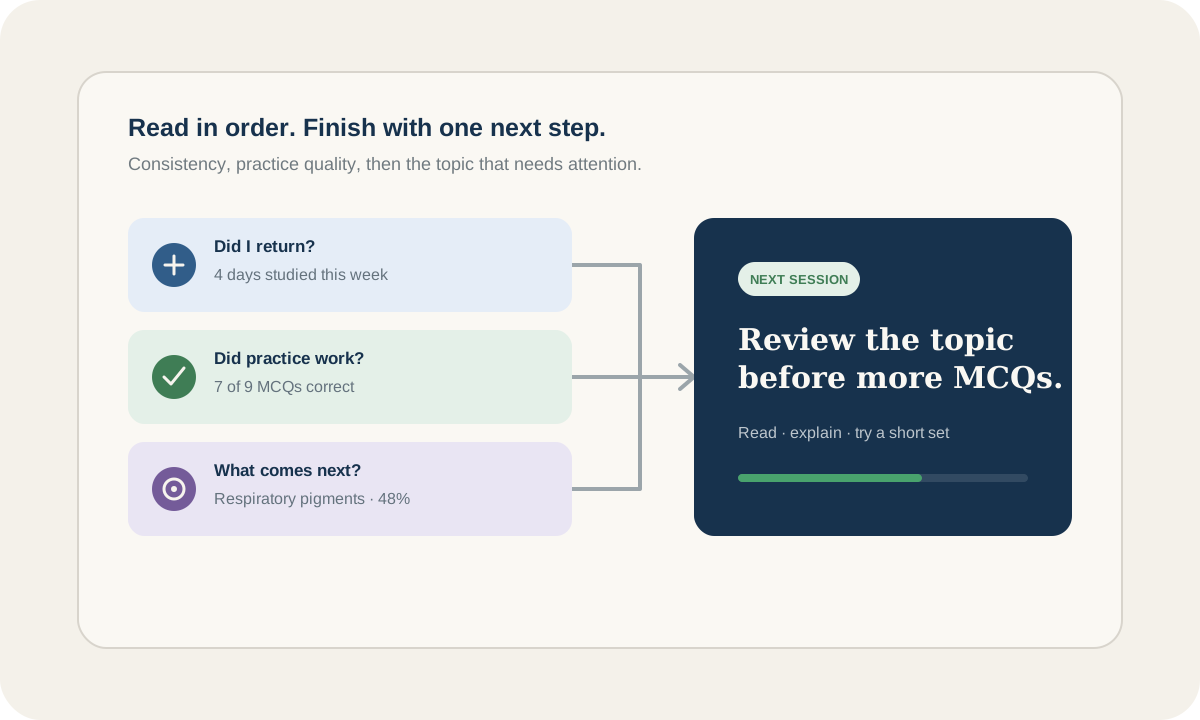
Read the report in one direction: consistency first, practice quality second, and the next topic last.
Read the report in three passes
Each pass answers a different question. Keeping them separate stops a busy week from looking automatically successful.
A report is only useful if it changes the next session
Start with the study footprint
4 days · 68 min reading
This tells you whether there is enough activity to judge. It is context, not a grade.
Then check if practice held up
7 of 9 MCQs · 18 reviews
Accuracy and honest card ratings show whether the work was actually sticking.
Use it to choose one next session
Respiratory pigments · 48%
Open one weak recent topic and match the next task to the missing evidence.
Check whether the practice worked
MCQs should be read as correct out of attempted. Seven correct out of nine is evidence that application is holding up. Two correct out of nine means more attempts are unlikely to help until the linked topic is understood again.
Flashcard volume needs its rating mix. Again and Hard are not failures. They tell the scheduler to keep a card close. A week dominated by Easy can reflect strong recall, but only when the answer genuinely came back without help.
When the numbers disagree
Many MCQs, low accuracy
Question volume is ahead of understanding.
Re-read the weakest linked topic, explain it without the page, then try a short MCQ set.
Many cards, mostly Again or Hard
The deck is finding fragile recall.
Keep the short review gaps and revisit the linked note. Do not force Easy to clear the deck.
Many outcomes started, few secure
You are opening more of the syllabus than you are finishing.
Pause new topics and complete one current outcome with reading, recall, and questions.
Choose the next topic, not another random activity
Start with a topic you studied this week that remains New or In Progress. Then use its weak signal to choose the task:
- Weak understanding: read the note and explain the idea in your own words.
- Weak recall: review the linked cards honestly.
- Weak application: attempt a short MCQ set and read every explanation.
- Wide but unfinished coverage: finish one started learning outcome before opening another.
A score is context, not the whole instruction
The score band tells you how secure the topic is. The weekly practice signals tell you what kind of work is missing. For the full scoring model, read what the mastery score measures.
Treat the weekly insight as a prompt
Notely compares a small set of real patterns, such as low MCQ accuracy or many unfinished outcomes, and suggests one reasonable next step. It does not diagnose your ability or predict an FBISE grade.
The report changes as you study. A saved progress video is a snapshot.
When new activity makes the video outdated, Notely marks it for an update. You can still read the current report without rendering a new video.