Guide 02 · Progress
What a Notely Mastery Score Measures
A clear look at the study signals behind your score, and why one lucky quiz cannot make a topic complete.
A mastery score is not a simple percentage of correct answers. It combines several kinds of study evidence so the number reflects how securely you know a topic.
The score runs from 0 to 100. It considers recall, question accuracy, reading, past-paper work, and how recently you studied.
High activity is not the same as broad evidence
Repeating one flashcard deck can produce excellent recall evidence, but it still tests only one study method. Adding meaningful reading and MCQ work shows that the topic can also be understood and applied.
The breadth gate
Your score needs more than one kind of proof.
Narrow evidence
1 study methodExcellent flashcard recall can raise the score, but cannot prove understanding and application by itself.
Capped at 60
In progress
Broad evidence
3 study methodsRecall, concept reading, and question work provide enough breadth to unlock the Mastered band.
Can reach 88
Mastered
Five signals shape the score
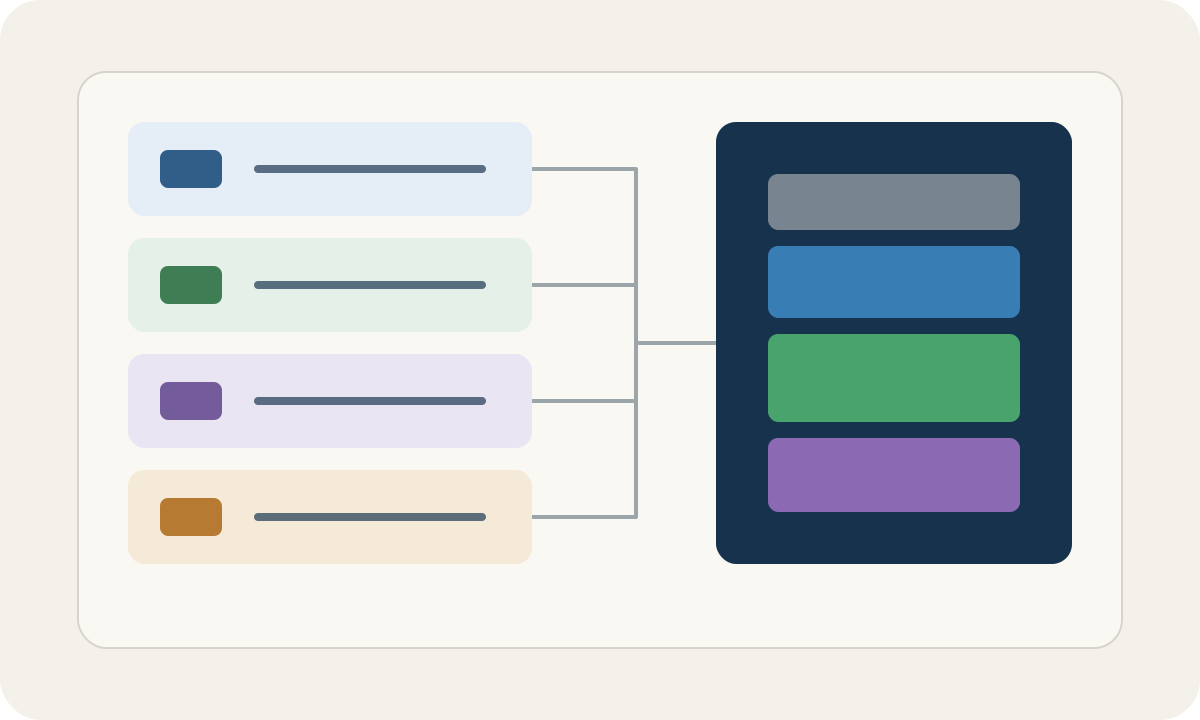
Flashcards and MCQs carry the most weight because they test active recall and application. Reading establishes the concept. Past papers add exam evidence. Recency prevents old performance from looking permanently fresh.
What shapes a topic score
Five signals, balanced so one activity cannot do all the work.
Availability matters
A topic is not penalised for content that does not exist. If no past-paper questions are linked, the available signals share the useful weight.
One strong method is not enough
A single engaged method can move a topic into In Progress, but it cannot carry the topic into Completed or Mastered by itself.
- Completed needs engagement from at least two available study methods.
- Mastered needs engagement from at least three available study methods.
This is the breadth gate. It stops a perfect flashcard run from hiding weak understanding elsewhere.
The four score bands
Every mastery indicator uses the same thresholds, from the dashboard to the topic page.
Four clear stages
New
0–10
In Progress
11–60
Completed
61–80
Mastered
81–100
Why the score is weighted
A plain average gives every activity equal influence, even when one activity is much easier to repeat or much less available. Weighting keeps the score balanced. The result is not a prediction of your board mark. It is a study signal that helps you decide what to do next.