Guide 04 · Decks
How Decks Turn Notely's Content Into Your Study Set
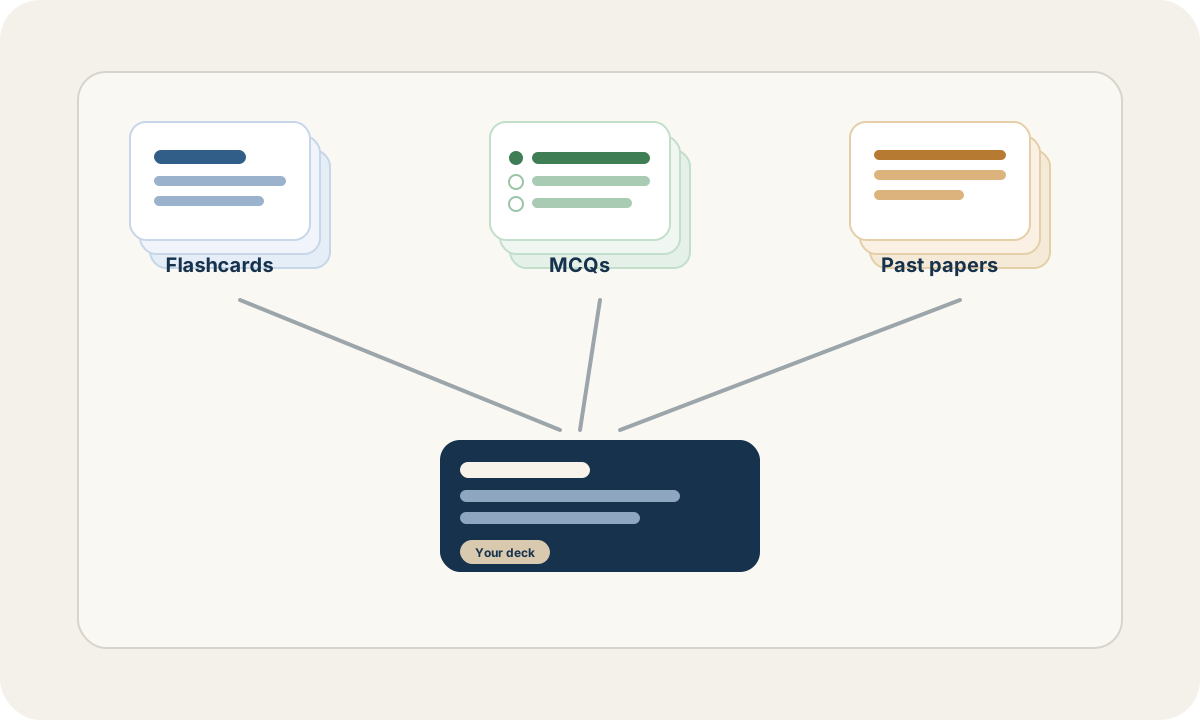
A Deck is the one place you decide what to review: pull in flashcards, MCQs, and past-paper questions, or write your own, and Notely schedules the reviews the same way it does everywhere else.
Everything else in Notely follows the chapter and topic order your board sets. A Deck does not. It is the one surface that follows your order instead, built from whatever mix of content you actually need before a test.
What goes into a Deck
A Deck can hold three kinds of items, in any combination:
Flashcards
Capture a canonical flashcard into your deck, or write your own from scratch.
MCQs
Add a canonical MCQ, or write an original one in your own words.
Past-paper questions
Capture a real past-paper question straight into the mix you're building.
None of this requires starting from a blank page. If a canonical flashcard, MCQ, or past-paper question already exists for the topic you're revising, you can add it to a Deck directly. Writing your own is just as valid when nothing canonical fits what you need to practise.
Reviews use the same scheduler
A Deck is not a separate quiz mode with its own rules. Cards and questions inside a Deck are reviewed with the same spaced-repetition scheduling that runs the rest of Notely's flashcard and MCQ practice, so a card you rate Again or Hard in a Deck comes back on the same kind of short interval a canonical card would.
In Notely
For the mechanics behind the review timing itself, read how spaced repetition works.
Building a Deck is always free
Notely's rule is simple: your own work is free, and consuming Notely's authored content is what's metered. Building and studying a Deck you assembled yourself never draws down your action balance. What's limited on the Free plan is capacity, not use: up to 5 active decks, 25 items each. A deck you've built stays studyable for as long as you want it. Pro removes both caps.
When to use a Deck instead of the syllabus view
Work through a chapter or topic page when you're learning something for the first time in the order your board teaches it. Build a Deck when you already know what you're weak on and want to practise that exact mix, for example the three past-paper question types that keep coming up, or a set of MCQs spanning two chapters before a combined test.