Guide 01 · Flashcards
How Spaced Repetition Works
A practical guide for FBISE Matric and FSc students who want to remember more without re-reading the same chapter every evening.
Cramming can carry a fact into tomorrow's test. It rarely carries that fact into next month. Spaced repetition solves a different problem: keeping useful knowledge available with fewer, better-timed reviews.
Notely schedules each flashcard separately. A difficult definition can return today while an easy formula waits several days. The schedule changes after every answer.
One review has three steps
Read the front, answer from memory, then reveal the back. Finally, rate how difficult the recall felt. The rating becomes new evidence in this card's history.
Front
What is the SI unit of force?
Answer from memory first.
Back
The newton (N)
Compare it with your answer.
How difficult was that recall?
Again
I forgot
Hard
I struggled
Good
I recalled it
Easy
It was instant
Review when recall takes useful effort
Reviewing immediately is usually too easy to strengthen recall. Waiting until the answer is gone turns practice into relearning. Notely aims for the useful window between those extremes.
The useful review window
Wait until recall takes effort, but not until the memory is gone.
Too soon
Still obvious. Little useful effort.
Review here
Recall succeeds with effort.
Too late
The answer needs relearning.
Notely's target
Notely uses a high recall target so most reviews are successful but still require effort. The exact window changes as the card builds its own history.
Every card keeps its own schedule
A rating is not a fixed timer. Notely combines it with that card's previous reviews. Easy on a new card may produce a gap of a few days. Easy after several successful reviews may produce a gap of several weeks.
The scheduler remembers
Same rating. Different next review.
The card's own history changes what Easy means.
New card
Short first gapNo review history yet
Even an Easy answer starts cautiously because the system has little evidence.
Due again in
A few days
Well-known card
Longer earned gapRecalled successfully four times
Repeated success shows that this specific memory is stable enough for a longer gap.
Due again in
Several weeks
The scheduler keeps checking that prediction. If a card was rated Easy several times but is later forgotten, an Again or Hard review pulls it closer. One overconfident answer cannot keep a weak card far away forever.
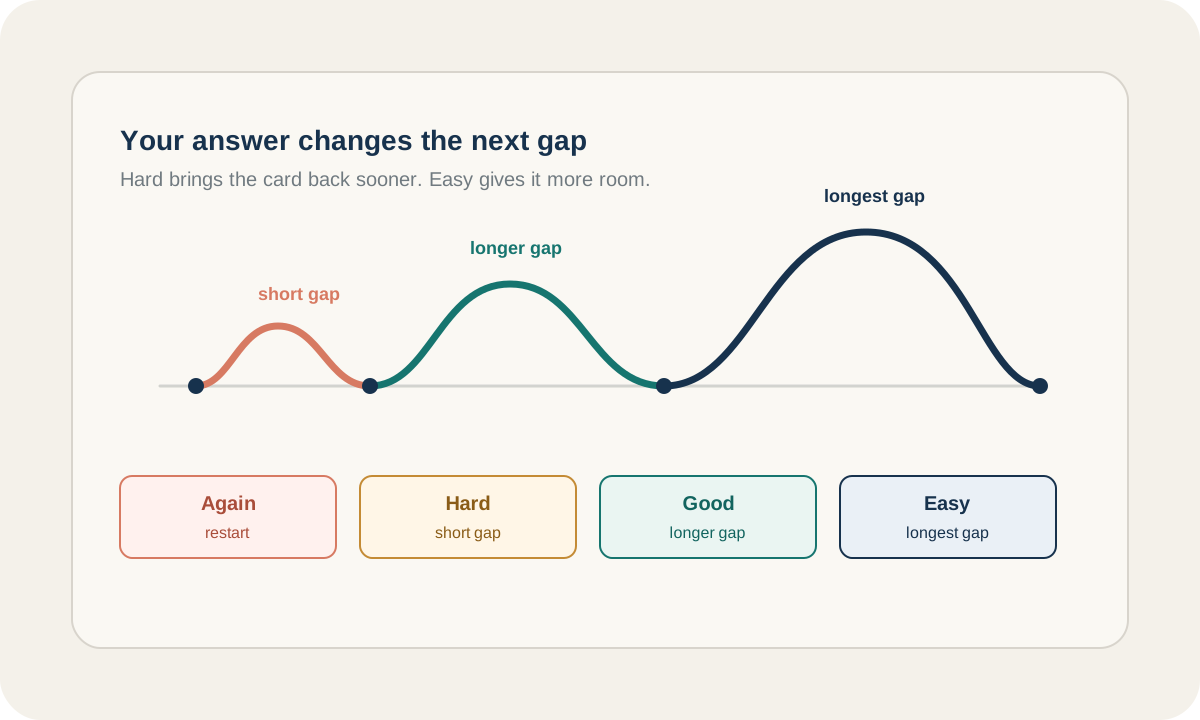
What the four ratings mean
Choose the rating that matches the effort it took to answer. Do not choose Easy just to clear the deck faster. Honest ratings produce the useful schedule.
One tap changes the next review
Again
Return much soonerYou did not remember it. The card needs rebuilding.
Hard
Keep the gap cautiousYou reached the answer with significant effort.
Good
Grow the gapYou recalled the answer with normal effort.
Easy
Grow it furtherThe correct answer felt immediate and secure.
Why this works better than re-reading
Familiar text can feel learned even when you cannot explain it without the page. A flashcard removes that support and asks you to retrieve the idea yourself. That retrieval is the practice. The schedule simply places it at a useful time.